
Who is Robert Resnick?
Robert W. Resnick — Bob, to almost everyone — was the clinical psychologist who did more than anyone to turn Gestalt therapy from what Fritz Perls was doing in front of an audience in the 1960s into something a working therapist could practise responsibly fifty years later.
He was trained and certified by Perls himself, and by Jim Simkin, and he was the man Perls chose to take Gestalt therapy to Europe. He then spent half a century training therapists in some twenty-five countries, in a summer programme that is probably the longest-running annual psychotherapy training in the world.
He is on this site because two of the films on the videos page are his, and because the tradition described elsewhere here as “contemporary Gestalt therapy” is very largely the tradition he built. He died in October 2022, at eighty-five, still working.
In brief
- Full name
- Robert William Resnick, PhD
- Born
- 10 July 1937, Far Rockaway, New York
- Died
- 11 October 2022, aged 85
- Trained by
- Fritz Perls and James Simkin, 1965–1970
- Certified by
- Perls and Simkin, by examination, in 1969
- Founded
- Gestalt Therapy Institute of Los Angeles (1969), and Gestalt Associates Training Los Angeles
- Known for
- Contemporary Gestalt therapy, homeorhesis, and the connection model of couples work
- Honoured with
- The 2019 APA Division 29 Distinguished Award for the International Advancement of Psychotherapy
For the man who taught him, see who Fritz Perls was. For the approach itself, start with what Gestalt therapy is or the paradoxical theory of change.
How do you stay connected to another person
and still keep a self?
His life
The taxi
Resnick grew up in Far Rockaway and put himself through City College at night, driving a New York cab in the daytime. He talked about the taxi for the next sixty years, and not out of sentiment: a stranger gets in, you have a few minutes of unavoidable and completely unprotected contact, and then they are gone. He called it his grounding in contacting, and a precursor to everything Gestalt.
The formal training followed — a master's at Columbia, a doctorate in clinical psychology at Florida — and then, in 1965, on a fellowship at UCLA, he watched Jim Simkin work. That was the end of his plan to go back to New York.
Two teachers, and why it mattered
Resnick is unusual in having trained closely with both Fritz Perls and Jim Simkin, and in being certified by both, by examination, in 1969. He was the youngest of that first generation.
What he took from each is the interesting part. From Perls came the demonstrative teaching: short, live pieces of work with a real person in front of a group, so that theory is shown rather than described. From Simkin came a rigorous phenomenological method — staying with what is actually observable, and not importing an interpretation. His own way of working was the two together, and it is a good deal more disciplined than the films of Perls suggest.
He was blunt about method. He rejected an eclectic Gestalt therapy — a bit of this and a bit of that, held together by the therapist's taste — and insisted that the approach is a coherent theory from which the practice follows. That position is why the empty chair irritated him: a technique detached from the theory that gave rise to it is just furniture.
Taking it to Europe
In 1969 Perls chose Resnick to introduce Gestalt therapy to Europe, and he ran his first workshop in Rotterdam that autumn. A few years later he and Jan Rainwater organised the first Summer Residential training, with therapists from the United States and Yugoslavia; it has run every year since and is probably the oldest annual psychotherapy training programme in the world.
The scale of what followed is easy to understate. Participants came from twenty-five countries, went home, and started training programmes of their own, often inviting the faculty on afterwards. Gary Yontef, Lynne Jacobs, and Hunter Beaumont taught on it; the guest faculty over the years included Erving Polster, Edwin and Sonia Nevis, Malcolm Parlett, Jean-Marie Robine, and Dan Bloom. A very large share of the Gestalt therapists practising in Europe today can trace their training to that programme in a step or two.
He kept up sixteen to eighteen weeks of teaching in Europe a year, for fifty years.
Homeorhesis: the correction he wanted to be remembered for
Gestalt theory had long leaned on homeostasis — the idea that an organism regulates itself back to a point of balance. Resnick thought that was mechanical and, worse, wrong about people. He proposed homeorhesis instead: not a return to a fixed point, but the holding of a trajectory. A river keeps its course while every drop in it moves.
The clinical consequence is not academic. If health is a fixed set-point, therapy aims to restore what was. If health is a trajectory, then the question is not how to get you back to normal but whether you are moving, and how you regain the path after being knocked off it. Nothing is meant to hold still, and a person who has stopped moving is the problem to be worked with rather than the goal.
Of the three things he said he wanted to be remembered for, this was one.
Couples: from fusion to connection
The second was the couples work he developed with Rita Resnick, his wife and co-founder of GATLA. Their argument is that the model most couples inherit is a fusion model: two people merge into a single unit, difference is a threat, and individuality is something to apologise for. In Gestalt terms that is confluence — a boundary dissolved rather than crossed — and it is precisely why so many such relationships quietly stop working.
They proposed a connection model in its place. Connection requires two people to connect: two distinct individuals, in a rhythm of coming together and separating, rather than one merged organism trying to hold still. Resnick framed the whole thing as the basic human dilemma — how to be connected to another person and still keep a self.
His description of intimacy is the part most people remember: intimacy is when you are not watching yourself and not watching the other. Not split, in other words, and not managing the encounter from somewhere outside it.
“Chicken soup is poison”
His first published article, in Perls's own festschrift around 1967, carried that title, and the phrase followed him for the rest of his career.
The target is the well-meant intervention that soothes rather than helps: the sympathy that steps in to take the discomfort away, closes down what was about to be felt, and leaves the person exactly where they were, but comforted. It feels like kindness on both sides of the room. Resnick's point was that it protects the therapist more than the client, and that being met honestly is worth more than being made to feel better.
He also wrote on shame — “The Recursive Loop of Shame” in Gestalt Review in 1997 — which is the same concern from the other direction.
Why he made the films
Resnick spent decades filming his own clinical work, alone and with Rita, and he was explicit about why: he wanted to replace the picture of Gestalt therapy the public had inherited from Perls's Gloria session in 1965. That film is still, sixty years later, how most students first see the approach, and it shows a seventy-year-old showman working in a manner nobody trains in now.
He never wrote the book on couples he always meant to write. He wrote it many times in his head, by his own account, and left the films instead.
That is the argument for watching him next to Perls rather than in place of him. The theory is recognisably the same; almost everything about the conduct of it is different.
Timeline
- 1937Born in Far RockawayOn the edge of New York City, out by the ocean.
- 1955–61City College, at nightHe took his psychology degree in night classes at CCNY and drove a New York taxi to pay for it. He said for the rest of his life that the cab was the best training a psychologist could get, and he meant it as theory rather than as a joke.
- 1961–63ColumbiaA master's in clinical psychology and educational foundations.
- 1963–67DoctorateClinical psychology at the University of Florida.
- 1965The turning pointOn a fellowship at the Neuropsychiatric Institute at UCLA he watched Jim Simkin give a demonstration. He cancelled his plans to return to New York.
- 1965–70Trained by Perls and SimkinCertified by examination in 1969, and the youngest of the people who trained directly with Perls.
- 1969The Los Angeles instituteFounded the Gestalt Therapy Institute of Los Angeles with Bob Martin and Eric Marcus, with the blessing of both his teachers.
- 1969Gestalt therapy comes to EuropePerls chose him to take the approach across the Atlantic. The first workshop was in Rotterdam that autumn.
- 1973The Summer Residential beginsOrganised with Jan Rainwater and others, and running every year since — probably the oldest annual psychotherapy training programme anywhere.
- late 1980sGATLAGestalt Associates Training Los Angeles, founded with his wife Rita Resnick and Todd Burley, and the home of the European programme thereafter.
- 2019The APA awardDivision 29 gave him its Distinguished Award for the International Advancement of Psychotherapy, fifty years after Rotterdam.
- 2022Died in OctoberStill teaching, and midway through writing the Gestalt therapy chapter for the APA Handbook of Psychotherapy.
The ideas
What he added, and what he insisted on.
Homeorhesis
Health as a trajectory held rather than a set-point restored. The clinical question stops being how to get back to normal and becomes whether you are moving at all.
The connection model
Two individuals in a rhythm of contact and separation, as against the fusion model in which a couple merges and difference becomes a threat.
Fusion as confluence
Naming the merged couple in the theory's own terms: a boundary dissolved instead of met. It looks like closeness and functions as its opposite.
Intimacy
Being with someone while not watching yourself and not watching them. No monitoring, no split, no management of the encounter from outside it.
Chicken soup is poison
The sympathetic move that takes the discomfort away and leaves the person where they were. Comfortable for both people, and no use to either.
Against eclecticism
Gestalt therapy as a coherent theory from which the practice follows, not a collection of techniques assembled to taste. He was unusually firm about this.
Showing the work
Live demonstration as the honest form of teaching, inherited from Perls — and an expectation that his own trainees would show their work too, rather than only describe it.
Phenomenological discipline
Simkin's contribution: stay with what is observable, describe rather than interpret, and resist the pull to explain the person to themselves.
The films
He filmed his own work for forty years, in order to replace the picture of Gestalt therapy that Perls's 1965 Gloria session had left behind. Watching the two of them in succession is the fastest way to see what changed.
On contemporary Gestalt therapy
Him setting out the approach as he understood it, including the keynote on homeorhesis — the correction to homeostasis he most wanted to be remembered for.
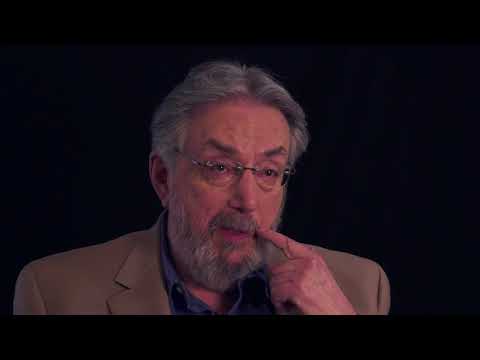 Robert W Resnick, Ph D – New Contemporary Gestalt Therapyyu1 One
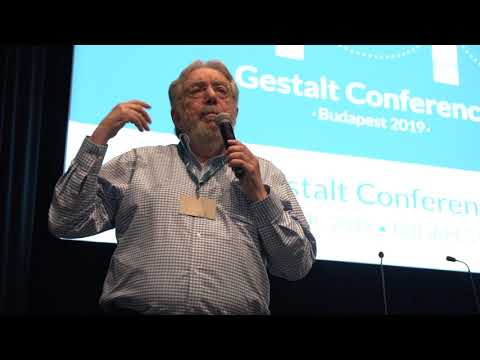 Gestalt Therapy and Homeostasis: Evolution — With Movement, Discrimination and GraceGestalt Conference 2019 Budapest
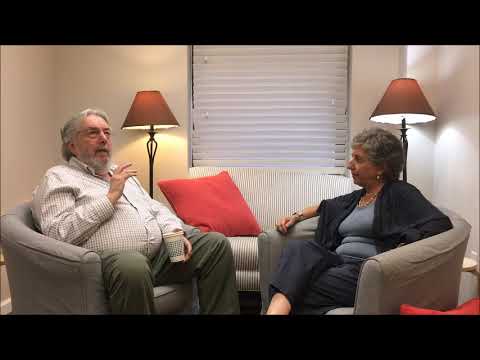 In dialogue with Margherita Spagnuolo LobbIstitutoGestaltHCCIT
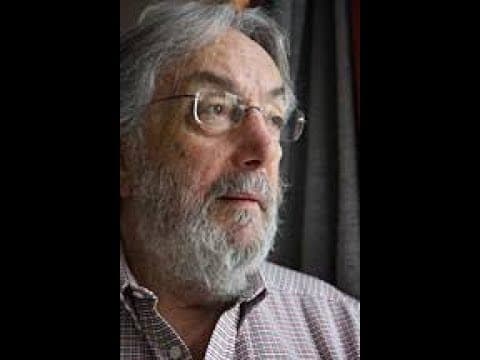 Interview at the EAGT conferenceGestalt Conference 2019 Budapest
 About Gestalt therapyGestalt Conference 2019 Budapest
Couples, and the connection model
With Rita Resnick. Their argument is that a couple has to be two people before it can be a couple.

Short answers
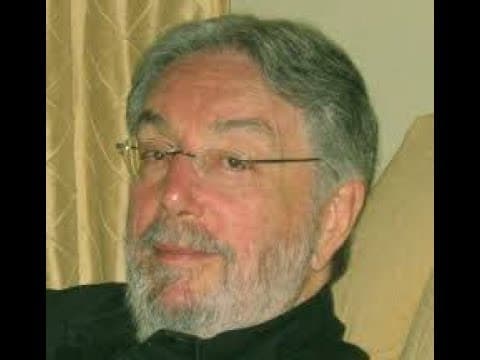
A handful of one and two minute replies, filmed at the 2019 conference in Budapest. The quickest way to get the measure of him.
 The fertile voidGestalt Conference 2019 Budapest
 The power of silenceGestalt Conference 2019 Budapest
 What attracted him to the Gestalt methodGestalt Conference 2019 Budapest
 The social impact of Gestalt therapyGestalt Conference 2019 Budapest
 Social action and individual therapyGestalt Conference 2019 Budapest
 On his professional lifeGestalt Conference 2019 Budapest
Looking back
Long conversations about his own life, and about Laura Perls, whom he knew.
These films are hosted on YouTube by third parties and remain the property of their copyright holders. They are linked here for educational interest and are not a substitute for counseling.
The people
Rita Resnick
Wife, and co-founder of GATLA
A clinical psychologist in her own right, and co-author of the connection model. The couples films are the two of them working together, and the model is not attributable to either one alone.
James Simkin
1919–1984, teacher
Trained with Perls in New York and brought the approach to California. It was watching Simkin work in 1965 that changed Resnick's plans, and Simkin's phenomenological rigour is the half of his style that the Perls films do not explain.
Fritz Perls
1893–1970, teacher
Trained and certified him, and chose him to take Gestalt therapy to Europe. Resnick was clear-eyed about him, and spent much of his career correcting the impression Perls's own films had left.
Todd Burley
Co-founder of GATLA
The third founder alongside Bob and Rita Resnick, and a long-standing member of the faculty.
Gary Yontef and Lynne Jacobs
Colleagues
Both taught on the European programme, and both did as much as anyone to give contemporary Gestalt therapy its dialogic, relational grounding in writing.
Bob Martin and Eric Marcus
Los Angeles, 1969
A social worker and a psychiatrist, and the other two founding officers of the Gestalt Therapy Institute of Los Angeles.
Jan Rainwater
The Summer Residential
Her wish to see training happen in Yugoslavia is what turned a single European workshop into an annual programme that has now run for over fifty years.
Writing
He published articles, chapters, and interviews rather than books, and said more than once that the book on couples existed only in his head.
- “Chicken Soup Is Poison,” in Perls's festschrift (c. 1967)
His first published article, and the one people still quote at each other in supervision.
- “Gestalt Therapy: Principles, Prisms and Perspectives,” British Gestalt Journal (1995)
An interview, and the fullest statement of how he understood the approach at that point.
- “The Recursive Loop of Shame,” Gestalt Review (1997)
On how shame feeds itself, and on the therapist's part in that loop.
- Commentary in F. Perls, Psychopathology of Awareness, eds. J.-M. Robine and C. Bowman (2020)
One of eleven commentators on a Perls manuscript that had only recently come to light.
- “Gestalt Therapy,” in the APA Handbook of Psychotherapy (2023)
The chapter he was writing when he died, and the first of the three things he said he wanted to be remembered for.
- Memorials in Gestalt Review, vol. 27 no. 1 (2023), doi:10.5325/gestaltreview.27.1.0100 and .0105
Two tributes: one on the life, one on the European Summer Residential he built. Much of the detail on this page comes from them.
Where to look
- GATLA — Gestalt Associates Training Los Angeles
The training organisation he founded with Rita Resnick and Todd Burley. The Summer Residential still runs.
- GATLA: the founders
Their own account of his life and career, including the degrees, the taxi, and the award.
- Bob Resnick at Learn Gestalt
Biography, interviews, and the demonstration films, which are sold rather than free.
- A Couple of Individuals
Bob and Rita Resnick's couples work, and the home of the connection model.
- IAAGT: our history, and its memorials
The international association's obituary, which is the source for his dates and the three things he wanted remembered.
- The connection model, described at length
An Irish journal article working through fusion and connection in detail, with the Resnicks' model at its centre.
- Gestalt Review
The journal he sat on the editorial board of from its founding.
Ready to talk?
The way of working described above is the one I practise. The first phone call is free.