
Who is Fritz Perls?
Fritz Perls is the name usually attached to the founding of Gestalt therapy. He was a German-Jewish psychiatrist, trained as a psychoanalyst, who spent forty years arguing with the tradition that trained him — and who ended his life as one of the more famous and more argued-over figures in American psychotherapy.
He did not invent the approach alone, though he is often credited with it alone. His wife Laura Perls, the writer Paul Goodman, and the psychologist Ralph Hefferline were all there at the beginning, and a good deal of what makes the approach worth practising came through them.
This page is here because several of the films on the videos page are Perls at work in the 1960s, and it helps to know what you are looking at. What you see in those films is one man, in one decade, at the height of his fame. It is not a description of what therapy is like — including here.
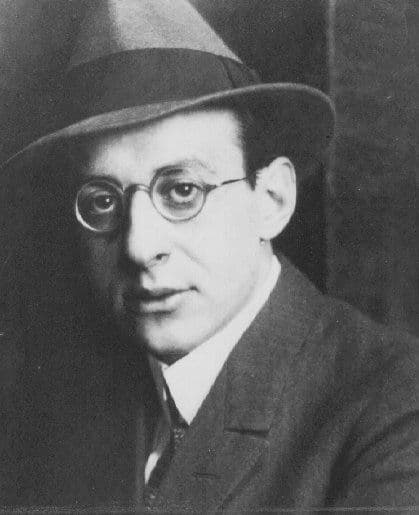
In brief
- Full name
- Friedrich Salomon Perls
- Born
- 8 July 1893, Berlin
- Died
- 14 March 1970, Chicago, aged 76
- Trained as
- Physician, then psychoanalyst
- Analysed by
- Karen Horney, Clara Happel, and Wilhelm Reich
- Known for
- Gestalt therapy, and the phrase “here and now”
- Founded with
- Laura Perls, Paul Goodman, and Ralph Hefferline
If you would rather read about the approach than the man, start with what Gestalt therapy is, the cycle of experience, or the paradoxical theory of change.
His life
Berlin: theatre, war, and medicine
Perls was a poor student and a difficult boy, by his own cheerful account. What saved him was the theatre. As a young man in Berlin he worked at the edges of Max Reinhardt's Deutsches Theater, and what he learned there — that how a thing is said carries more than what is said, that gesture and breath and timing are the real information — never left him. Anyone who has watched him work can see the director in him, and the showman.
Then came the war. He served as a medic in a pioneer battalion in the gas warfare on the Western Front, and it marked him permanently. He came out of it with no remaining faith in the civilisation that had produced it, which is worth remembering when he later sounds glib about respectable opinion.
He qualified in medicine in Berlin in 1921 and moved into neuropsychiatry. He also moved into the psychoanalytic world of Weimar Berlin, which was then the most interesting room in psychology.
Frankfurt: Goldstein, Gestalt psychology, and Laura
In 1926 Perls went to Frankfurt as an assistant to Kurt Goldstein, who was working with soldiers whose brains had been damaged in the war. Goldstein insisted that such a patient could not be understood as a set of broken components, but only as a whole organism doing its best to cope. This is the idea that turns into Gestalt therapy, and it arrived here rather than later.
Frankfurt was also thick with the academic Gestalt psychologists — Wertheimer, Köhler, Koffka — whose work on perception supplied the vocabulary. We perceive whole shapes, not accumulations of parts. Something stands out as figure while the rest recedes into ground. The therapy borrows that structure and applies it to feeling, need, and attention.
And in Frankfurt he met Lore Posner, a psychology graduate student twelve years his junior, who was reading phenomenology and existential philosophy that he had not read. They married in 1930. Her contribution to what followed was continuous and, for decades, largely unacknowledged — including by him.
His own analyses shaped him as much as his reading. Karen Horney sent him to Frankfurt; Clara Happel took him on there; and in 1931 he went to Wilhelm Reich, who mattered most. Reich attended to the body, to posture and breath and muscular holding, and treated resistance as something happening in the room rather than a story about the past. Both are in Gestalt therapy.
Exile: Amsterdam, then Johannesburg
In April 1933 Perls crossed into the Netherlands with very little money, having been active enough in the Antifascist League to be worth arresting. The Amsterdam year was miserable and poor. In 1934, with a recommendation from Ernest Jones, the Perlses sailed for South Africa.
Johannesburg was good to them. They founded the South African Institute for Psychoanalysis, built a large practice, and lived well; he learned to fly. Fritz served as an army psychiatrist with South African forces during the war.
It was also where he stopped being a psychoanalyst in anything but training. Ego, Hunger and Aggression came out in Durban in 1942, and it is where the argument opens: that the analytic picture of digestion and aggression was wrong, that a person assimilates experience the way a body assimilates food — chewing it, taking what nourishes, spitting out the rest — and that what we swallow whole poisons us. He was calling the method 'concentration therapy' at that point. The name Gestalt came later.
The break with the analytic establishment had a personal edge. In 1936 he had flown to the congress at Marienbad to give a paper on oral resistances, expecting to be recognised; the paper landed badly, and Freud met him at the door for a few cold minutes and did not engage. He was still telling that story bitterly thirty years later, and some of his lifelong contempt for orthodoxy starts in that corridor.
New York: the book, and the people who wrote it with him
Perls arrived in New York in 1946, in his fifties, starting again. What happened next was a genuine collaboration, and the later mythology has flattened it.
Gestalt Therapy: Excitement and Growth in the Human Personality appeared in 1951 under three names. Ralph Hefferline, a psychologist at Columbia, developed and tested the experiments in the first volume with his students. Paul Goodman — anarchist, novelist, social critic, and a far better writer than Perls — took Perls's rough manuscript and wrote the theoretical second volume, supplying much of the language the approach still uses. It is the densest and most serious statement of the theory, and the part most people skip.
The New York Institute for Gestalt Therapy followed in 1952, run out of the Perlses' apartment on Central Park West, with Laura, Goodman, Isadore From, and Paul Weisz. A Cleveland institute followed in 1954. Laura and From taught there for decades, and the relational, dialogic tradition that most Gestalt therapists now practise within came down that line rather than through Fritz.
Fritz himself was restless, unfaithful, and increasingly bored. By 1960 he had left New York, and the marriage was effectively over, though they never divorced.
Esalen: the guru years
After some years of travelling — Miami, Los Angeles, Ohio, a spell in Japan at a Zen monastery, heart trouble, and experiments with LSD — Perls arrived at the Esalen Institute at Big Sur and took up residence in 1964. He was seventy, with a white beard and a jumpsuit, and he became the most recognisable figure of the American human potential movement.
The format was the workshop: one participant at a time in the 'hot seat' in front of a group, dream work, the empty chair, and Perls himself — fast, funny, theatrical, and often brutal. Much of it was filmed and much of it was transcribed, which is why our picture of him is so heavily weighted to these five years. Gestalt Therapy Verbatim (1969) is a transcript of that room.
So is the Gestalt Prayer, the four lines that escaped into the culture and got printed on a million posters. Laura Perls and Paul Goodman both disliked it, and they had a point: read on its own it sounds like a licence for indifference, which is not what the theory says.
In 1969 he left for Lake Cowichan on Vancouver Island to build a residential Gestalt community — a 'kibbutz', he called it — where people would live and train together rather than pass through for a weekend. He died in Chicago in March 1970, of heart failure after surgery, a few months later.
The difficult part
Perls was not a good man, and there is no use pretending otherwise. He was vain, needy of an audience, and dismissive of people who bored him. He was serially unfaithful and slept with women he was teaching, at an institution and in a decade with no rules about it. He treated Laura badly and did not correct the public impression that Gestalt therapy was his invention alone. He could be cruel to participants in front of a room, and some of the recorded moments people find electrifying are hard to watch for exactly that reason.
He also had a real contempt for explanation — he had names for interpretation and theorising that cannot be printed here — and that anti-intellectual streak did the approach lasting damage. It let a generation take the techniques without the theory, which is how Gestalt therapy acquired its reputation as a bag of tricks with a chair in it.
None of this is a reason to ignore him. It is a reason not to model yourself on him.
What came after
The core of what he saw has held up: attention to the present moment, awareness as the engine of change rather than a preliminary to it, and the person understood as a whole in contact with a situation rather than a case history to be decoded.
The manner has not held up, and it was never the whole picture even at the time. Laura Perls and Isadore From in New York, Erving and Miriam Polster in Cleveland, and later Gary Yontef and Robert Resnick built the approach into something dialogic and considerably kinder — two people working together, with the relationship between them treated as part of the method rather than a distraction from it. Beisser's short paper on the paradoxical theory of change, written the year Perls died, states the underlying principle better than Perls ever did.
That is the tradition I work in. If you have watched the old films and found the manner off-putting, that is a reasonable response, and it is not what a session here looks like. Nobody gets pushed into a chair and told to perform for an audience.
Timeline
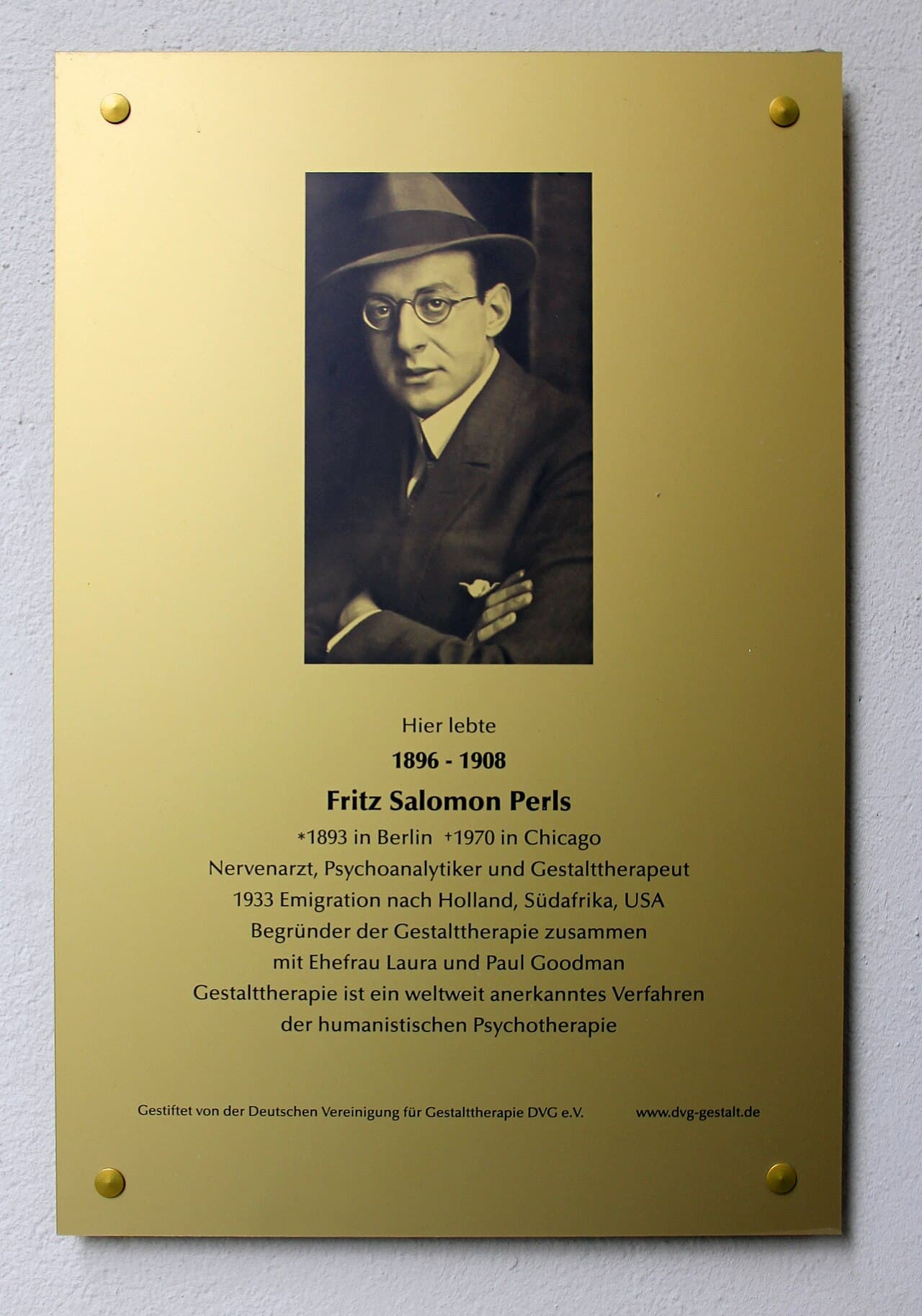
- 1893Born in BerlinInto an assimilated Jewish family in Schöneberg. A memorial plaque now marks the apartment on Ansbacher Straße where he lived as a boy.
- 1916The trenchesServed as a medic with a German pioneer battalion, in gas warfare on the Western Front. He wrote later that it destroyed whatever he had believed about civilisation.
- 1921Qualified in medicineMD in Berlin, going on to specialise in neuropsychiatry.
- 1926Frankfurt, and Kurt GoldsteinAssistant at Goldstein's institute for brain-injured soldiers, and his first real exposure to Gestalt psychology. He also met Lore Posner there — later Laura Perls.
- 1930Married LauraShe had a doctorate in psychology and ideas of her own; they worked side by side for the next twenty-five years.
- 1933Flight from GermanyJewish, left-wing, and active in the Antifascist League. He crossed into the Netherlands with almost nothing; the family spent a hard year in Amsterdam.
- 1934JohannesburgFounded the South African Institute for Psychoanalysis and, for a decade, prospered.
- 1936Marienbad, and FreudTravelled to the psychoanalytic congress to present a paper on oral resistances. It was badly received, and his brief meeting with Freud was a humiliation he never let go of.
- 1942Ego, Hunger and AggressionPublished in Durban, subtitled “A Revision of Freud's Theory and Method”. Laura wrote parts of it and was not credited.
- 1946New YorkArrived alone and nearly broke, sent on his way by Erich Fromm. Laura and the children followed.
- 1951The founding textGestalt Therapy: Excitement and Growth in the Human Personality, written with Paul Goodman and Ralph Hefferline.
- 1952The New York InstituteFounded with Laura, Goodman, Isadore From, and Paul Weisz, in the Perlses' own apartment. Cleveland followed in 1954.
- 1960WestLeft New York and his marriage in all but name, travelling and teaching across the United States before settling in California.
- 1964EsalenTook up residence at the Esalen Institute at Big Sur, where the weekend workshops and the films that made him famous were made.
- 1969Two books, and a move northGestalt Therapy Verbatim and the autobiography In and Out the Garbage Pail, then a move to Lake Cowichan on Vancouver Island to found a residential Gestalt community.
- 1970ChicagoDied of heart failure following surgery, four months after the community opened.
The ideas
The working vocabulary of the approach, in the order it makes sense to read it rather than alphabetically.
Figure and ground
Borrowed straight from Gestalt psychology. At any moment something stands out and the rest falls away. In therapy the question is what is figure for you now — and what keeps failing to become figure, though it needs to.
The here and now
The phrase he is most associated with. History is not irrelevant, but the useful material is what that history is still doing in the present, which is available to both of us as it happens.
Awareness
Not insight, and not explanation. Simple contact with what is actually happening in you and around you. Perls's claim, and it is the load-bearing one, is that awareness is itself curative: seen clearly, most things move.
Organismic self-regulation
Goldstein's legacy. An organism left alone tends to sort itself out — needs arise, get met, and recede. Difficulty is a regulation that has been interrupted, usually for reasons that once made sense.
Contact and the contact boundary
Health lives at the boundary between you and everything else: meeting, taking in, refusing, withdrawing. Neurosis is a chronic disturbance of that meeting.
The interruptions to contact
Introjection, swallowing whole what should be chewed over. Projection, putting outside what belongs inside. Retroflection, doing to yourself what you wanted to do to someone else. Deflection, taking the heat out of contact. Confluence, merging so there is no boundary left to meet across.
Unfinished business
Situations that never completed keep pulling at attention until they do. Much of the work is with what is still open.
Top dog and underdog
His name for the internal argument between the part that demands and the part that squirms. Both are you, both are performing, and neither ever wins.
The empty chair
The technique everyone has heard of: speaking to an absent person, or to a part of yourself, as though they were present. Done well it makes a conflict live rather than reported. Done badly it is theatre, and Perls has to take some blame for how often it is done badly.
The layers of neurosis
His map of what a person moves through: cliché, then role-playing, then the impasse where the usual moves stop working, then the implosive layer, and then something genuinely felt. The impasse is the interesting part, and where most people turn back.
The shoulds
The internalised demands people carry as though they were their own. Perls was relentless in asking whose voice a should was in.
Responsibility as response-ability
Not blame, but the capacity to respond. Rephrasing “I can't” as “I won't”, or “it happened” as “I did it”, to find out whether it is true.
Dreams
He did not interpret them. Every part of the dream is a part of the dreamer, so instead of explaining the dream you speak as its pieces — the road, the locked door, the dog — and find out what each one wants.
The safe emergency
What a session is meant to be: a situation real enough that something is genuinely at stake, safe enough that you can afford to find out what happens.
The films
Perls was filmed and transcribed more than any other therapist of his generation, which is why our picture of him is so weighted to his last five years.
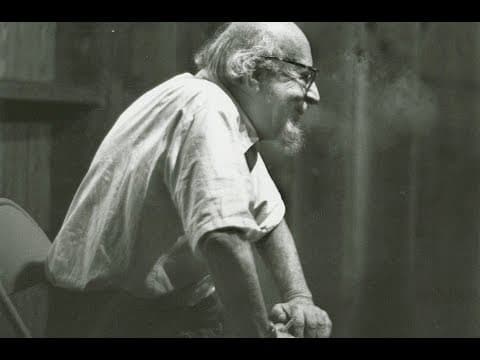
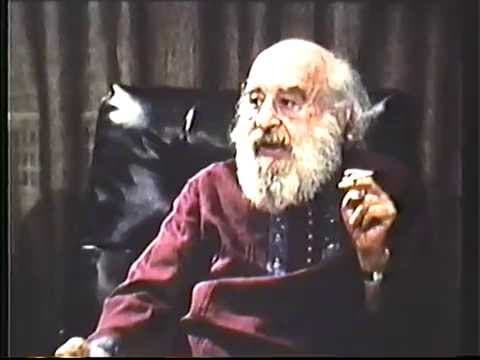
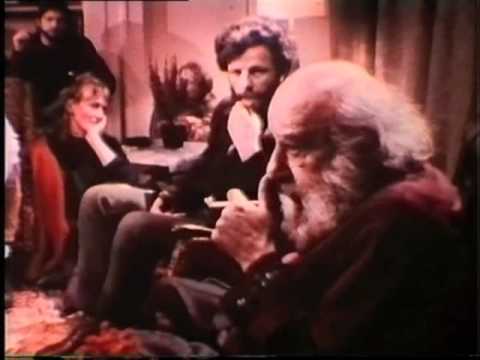
Perls at work
The films that made his reputation, all from the last five years of his life. Worth watching with the date in mind: this is 1965 to 1970, in front of an audience, and it is not a model of current practice.


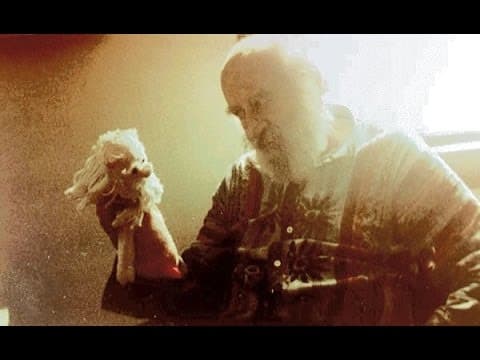
Perls explaining the theory
Him talking rather than working, which is where he is easier to follow and rather more careful.
His life, and the people around him
A contemporary documentary, a first-hand account of Esalen, and two conversations about Laura Perls — whose part in this is easy to miss if you only watch Fritz.
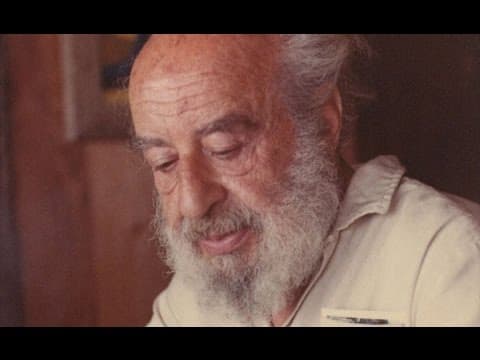
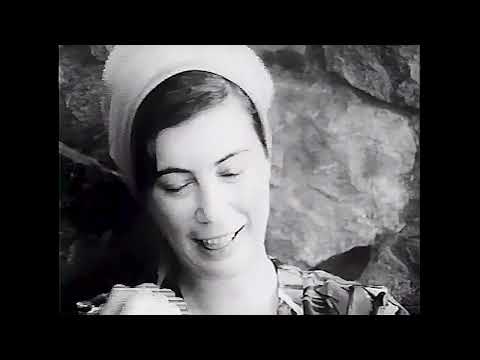
These films are hosted on YouTube by third parties and remain the property of their copyright holders. They are linked here for educational interest and are not a substitute for counseling.
The people
Gestalt therapy was not one man's work, whatever the posters suggested.
Laura Perls
1905–1990, co-founder
Lore Posner before she married him. A psychologist with a doctorate and a serious grounding in phenomenology and existential philosophy, she wrote uncredited parts of Ego, Hunger and Aggression, co-founded the New York Institute, and then held it together for thirty years after Fritz left. The relational, dialogic emphasis in contemporary practice is largely hers.
Paul Goodman
1911–1972, theorist
Anarchist writer and social critic, later famous for Growing Up Absurd. He wrote the theoretical volume of the 1951 book from Perls's notes and gave the approach much of its language. Perls's later dismissiveness about theory sits oddly with the fact that his own theory was written by someone else.
Ralph Hefferline
1910–1974, experimentalist
Academic psychologist at Columbia. The practical experiments in the first half of the 1951 book came out of his classroom, tested on his students.
Isadore From
1918–1994, teacher
Never wrote a book, and taught two generations of the New York institute in supervision instead. Widely regarded as the most exact reader the theory ever had.
Erving and Miriam Polster
Cleveland
Their Gestalt Therapy Integrated (1973) is still the most readable bridge between the theory and ordinary clinical work, and it is where most therapists actually learn the approach.
Kurt Goldstein
1878–1965, precursor
The neurologist whose holistic account of the injured organism, learned first-hand in Frankfurt, is the backbone of the whole thing.
Wilhelm Reich
1897–1957, analyst
Perls's own analyst in 1931, and the source of the attention to body, breath, and character armour, and of treating resistance as a present event rather than a historical one.
Arnold Beisser
1925–1991
Wrote a five-page paper in 1970 that states the principle underneath the whole approach more clearly than Perls managed: we change by becoming what we are, not by striving to become what we are not.
The Gestalt Prayer
I do my thing and you do your thing.
I am not in this world to live up to your expectations,
and you are not in this world to live up to mine.
I and thou: if by chance we find each other, it's beautiful.
If not, it can't be helped.
From Gestalt Therapy Verbatim, 1969. It became the best-known thing he ever wrote and, read alone, badly misrepresents the work: the theory is about contact between people, not about being free of obligation to them. Laura Perls disliked it for that reason.
Books and papers
His own books
- Ego, Hunger and Aggression: A Revision of Freud's Theory and Method (1942)
Written in South Africa, with uncredited contributions from Laura Perls. The opening argument, and the origin of the digestion metaphor.
- Gestalt Therapy: Excitement and Growth in the Human Personality (1951), with Ralph Hefferline and Paul Goodman
The founding text. Volume one is experiments to work through; volume two is Goodman's theory, and is heavy going but the real thing.
- Gestalt Therapy Verbatim (1969)
Edited transcripts of the Esalen workshops. Not a systematic account of anything — it shows the method being used rather than describing it. Contains the Gestalt Prayer.
- In and Out the Garbage Pail (1969)
The autobiography: fragments, poems, memories, and self-justification in no particular order. Unreliable and revealing in equal measure.
- The Gestalt Approach and Eye Witness to Therapy (1973)
Published after his death. The most orderly statement of the theory in his own voice, and the best place to start with him.
Books about him
- Clarkson, P., & Mackewn, J. (1993). Fritz Perls.
Short, critical, and even-handed on both the contribution and the conduct. The best single introduction.
- Gaines, J. (1979). Fritz Perls: Here and Now.
An oral history stitched together from the people who knew him, who do not agree with each other.
- Shepard, M. (1975). Fritz: An Intimate Portrait.
The first biography, written by someone who had been in the room. Contested on details.
- Bocian, B. (2010). Fritz Perls in Berlin, 1893–1933.
Scholarly, and the corrective to Perls's own account of his beginnings.
- Wysong, J., & Rosenfeld, E. (eds.) (1982). An Oral History of Gestalt Therapy.
Interviews with Laura Perls, Isadore From, and others present at the start.
- Wheeler, G. (1991). Gestalt Reconsidered.
The argument that the individualist strand Perls made famous was a wrong turn, and that the theory always implied something more relational.
Papers and essays
- Beisser, A. (1970). “The Paradoxical Theory of Change,” in Fagan & Shepherd (eds.), Gestalt Therapy Now.
Five pages, and the clearest statement of the principle. The full text is hosted by The Gestalt Journal Press.
- Perls, F. (1948). “Theory and Technique of Personality Integration,” American Journal of Psychotherapy, 2(4).
The New York-era statement of the method, before the 1951 book and before the fame.
- Perls, F. (1936). “Oral Resistances,” presented at Marienbad; revised into Ego, Hunger and Aggression.
The paper that was rejected by the analytic congress, which is where the break begins.
- Perls, F. (1970). “Four Lectures,” in Fagan & Shepherd (eds.), Gestalt Therapy Now.
Late Perls, lecturing rather than performing, and more careful than the workshop transcripts.
- Yontef, G. (1993). Awareness, Dialogue and Process: Essays on Gestalt Therapy.
Where the dialogic correction to the Esalen style is set out most clearly.
Most of these are in print or in libraries rather than online. The citations will find them in any catalogue.
Archives and further reading
- The Gestalt Therapy Page — gestalt.org
Maintained by The Gestalt Journal Press. Archival material, including the Beisser paper in full.
- New York Institute for Gestalt Therapy
Founded in 1952 by the Perlses, Goodman, From, and Weisz, and still running.
- Gestalt Therapy Verbatim at the Internet Archive
Scanned and borrowable with a free Archive account, rather than freely readable — the book is still in copyright.
- Gestalt Therapy (1951) at the Internet Archive
The founding text, also borrowable.
- Esalen Institute
Where he spent his last five years, and where the films were made.
- International Association for the Advancement of Gestalt Therapy
The international professional association for the approach as it is practised now.
- Fritz Perls on Wikipedia
A reasonable summary with a long reference list, if you want somewhere to carry on from.
Ready to talk?
None of the above is what a session is like. If you would like to know what is, the first phone call is free.